Two lives in uncertain times
Remembering for a common future
Discover the extraordinary lives of Wilma Iggers (1921-2025) and Georg G. Iggers (1926 – 2017) who fled as youngsters with their families the Czech Republic and Nazi Germany in 1938, became pioneers in the U.S. Civil Rights Movement, and left their mark as scholars in the United States and beyond.
The starting point for the multimedia contemporary witness project “Two sides of history - remembering for a common future” is the double biography Zwei Seiten der Geschichte – Lebensbericht aus unruhigen Zeiten, published by Vandenhoeck & Ruprecht in Göttingen/Germany in 2002.
As part of the project, a volunteer team of historians, film authors, educators, archivists and historically interested laypeople developed a multimedia script containing more than alltogether 400 text excerpts, videos, photos and documents.
Prof. Wilma and Georg Iggers as well as more than 20 other contemporary witnesses have kindly made themselves available for interviews at original locations in Germany, the Czech Republic, Canada, and the USA.
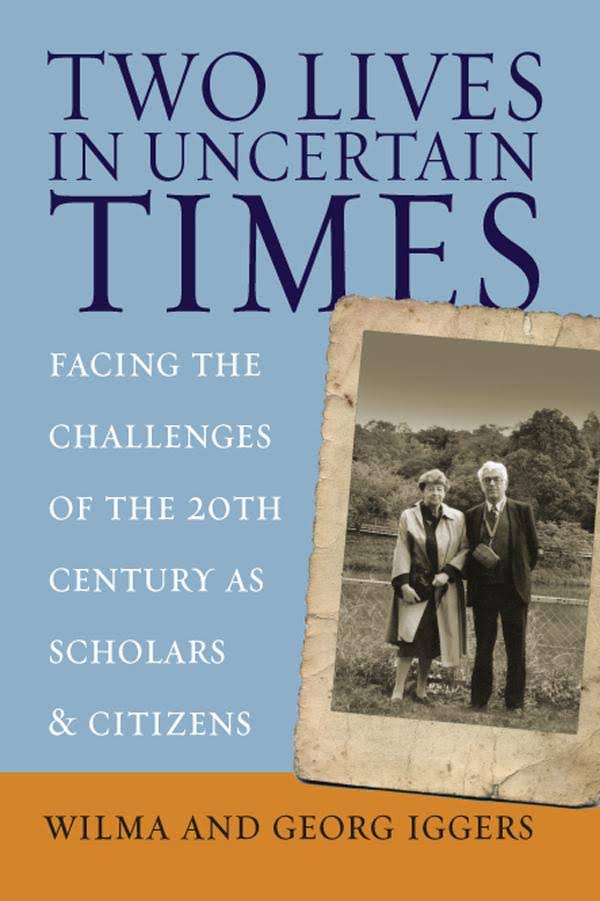
This present English version of the project (published in 2026) is essentially based on the former German project version, but also contains a large number of English texts taken from the book Wilma Iggers and George Iggers, Two Lives in Uncertain Times. Facing the Challenges of the 20th Century as Scholars and Citizens (New York, 2006) with the kind permission of the publisher Berghahn. (https://www.berghahnbooks.com/title/IggersTwo)
This didactically designed website is the result of years of voluntary work. Constant revision and additions are planned. The non-profit organization Brücken Bauen e.V. (Herford / Germany) would be grateful for any suggestions.
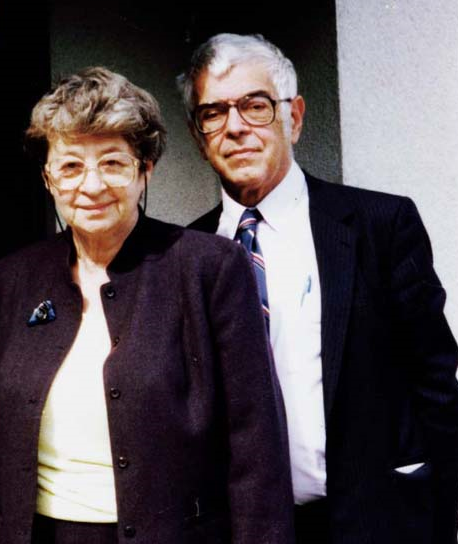
Introduction
Our introduction video provides an overview over the upcoming chapters.
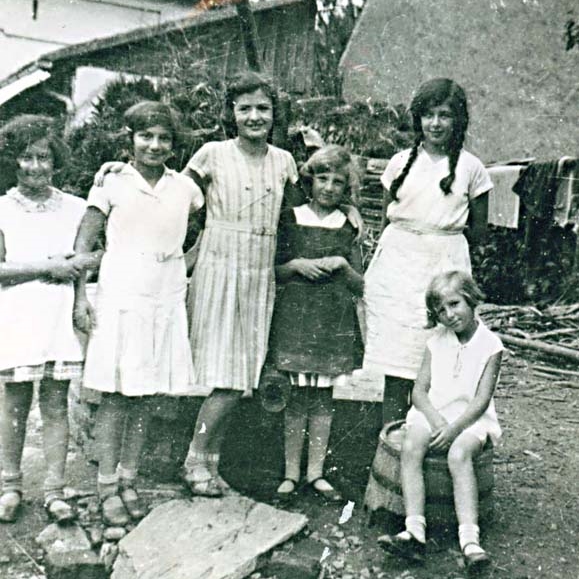
Wilma Abeles
Childhood and emigration from Bohemia to Canada
Wilma Iggers is born as the first daughter of the Jewish landowner Abeles in 1921 in a small village in Bohemia in the former Czechoslovakia. In 1933 she changes from the German school in Bischofteinitz, today’s Horsovsky Tyn, to the Czech grammar school in Domazlice. Wilma Abeles flees with a large group of relatives shortly after the Munich Agreement and a few days before the German Wehrmacht invades Bohemia and enters Czechoslovakia in October 1938. From there they emigrate to Hamilton in Canada. Wilma Abeles studies German and Romance languages and literature at a small college in the province of Ontario.
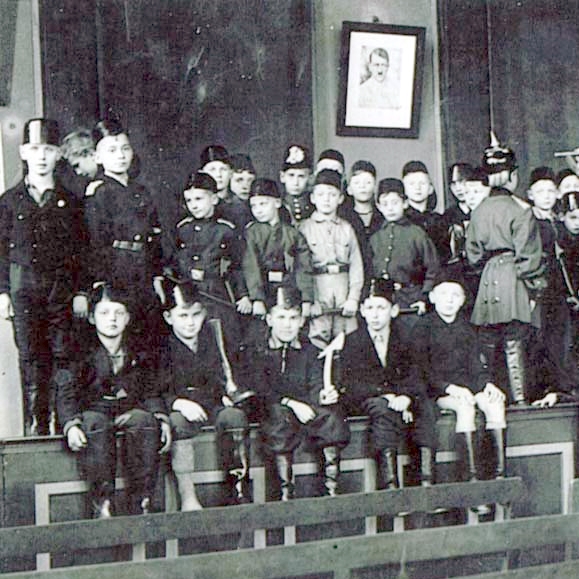
Georg Iggers
Childhood and emigration from Hamburg to the USA
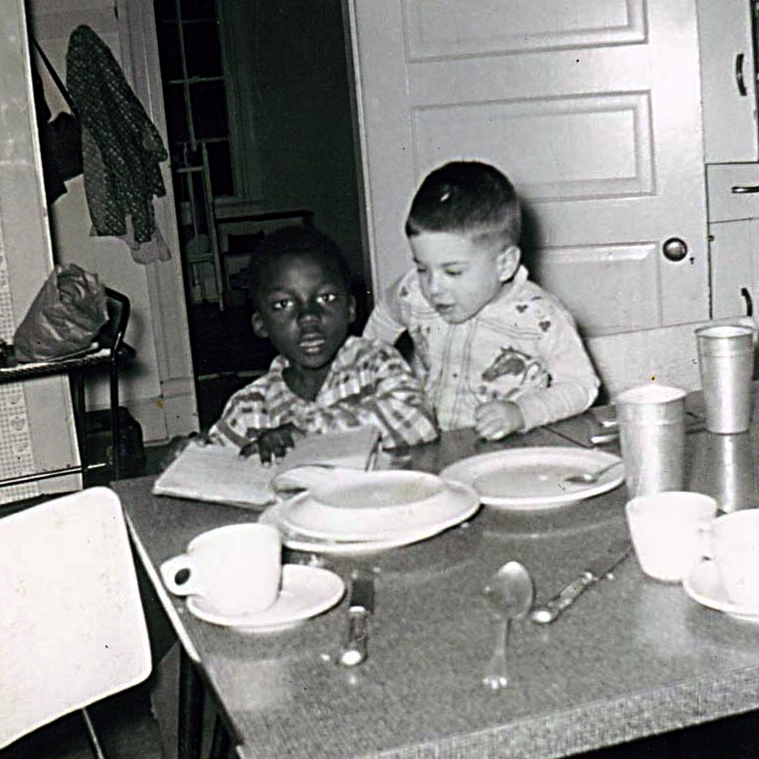
Georg Igersheimer was born in Hamburg in 1926 as the son of a Jewish businessman. In April 1933, shortly after the beginning of the Hitler dictatorship, he is enrolled at the Knauerstrasse Boys’ School. Very early on he developed a strong interest in Jewish culture and religion. Because of conflicts with his parents, he spends just under a year in 1937/1938 in a Jewish children’s home in Esslingen. In October 1938, a few weeks before the Night of Broken Glass (Reichskristallnacht) the Igersheimer family emigrated via England to Richmond to the USA. There, Georg like his parents and his sister took the surname Iggers and initially attended high school. But at the age of fifteen, he already goes to the university there. He is confronted with the discrimination of the black population and, together with black fellow students, forms a student group that opposes racial segregation.
Civil courage
Active in the Black Civil Rights Movement
Wilma Abeles and Georg Iggers met at the University of Chicago after the Second World War, where they studied German language and literature and History respectively and later received their doctorates. They married in 1949 and had three children in the following years: Jeremy, Daniel and Jonathan. One year later they decided to take a teaching position at a small black college in Little Rock in the state of Arkansas. Over the next few years, they conduct research on the situation in black and white high schools, which is presented in court as an important reason for enrolling the first black students in a white high school (Central High) in 1957. After further years of involvement as some of the few white members of the black civil rights movement, they returned to Germany with their children for the first time in 1961 for a longer period of time, where they did scientific work in Göttingen. From 1965 Wilma and Georg Iggers found professorships in German Studies and History in Buffalo, New York. One year later,Wilma Iggers returned to Czechoslovakia, to visit her home town, today’s Horsovsky Tyn, in search of the remains of her own childhood. She establishes contacts with many people who are interested in the fate of the Jewish minority.
Building bridges
Contacts in Europe and around the world
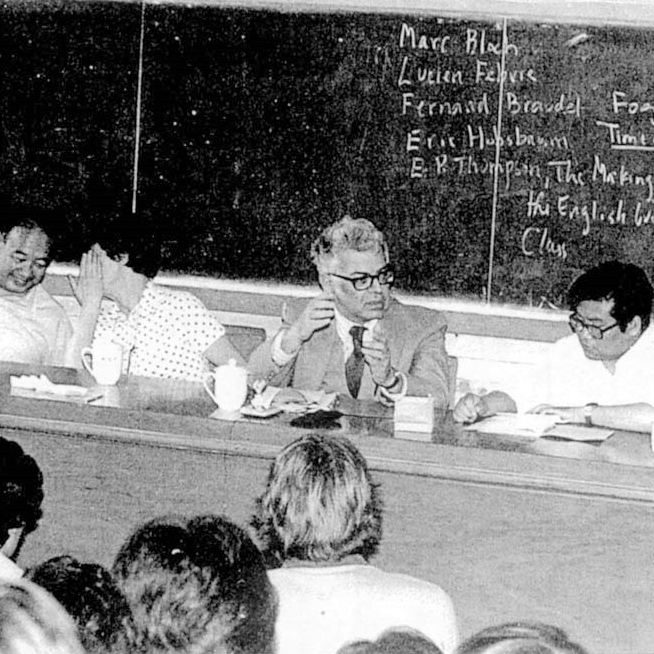
As internationally recognized scientists they build bridges from the 1960s onwards, not only to the Federal Republic and the former GDR, but also to Asia. Thus they belong to the first US-Americans who spend a longer stay abroad in the People’s Republic of China in 1984.
Return
to Germany and the Czech Republic
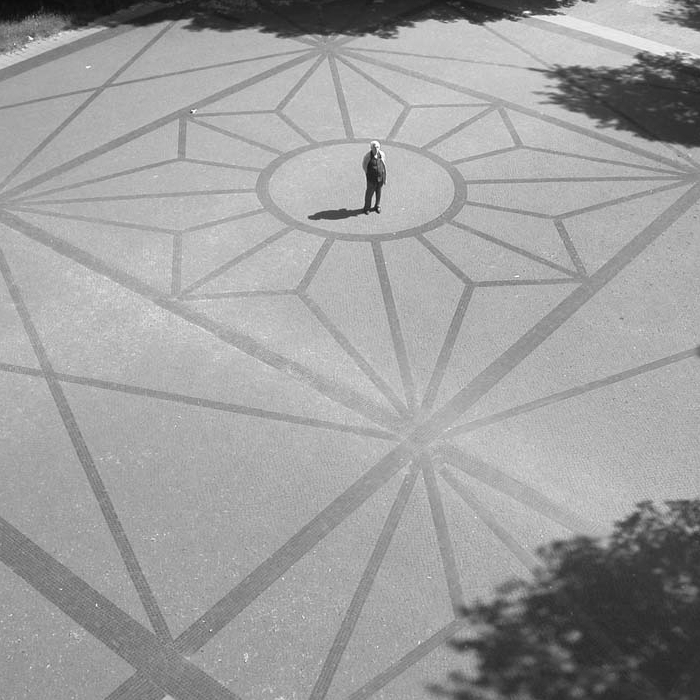
After the reunification in 1990, they take on German citizenship and spend half a year in Göttingen and half a year in Buffalo. Wilma and Georg Iggers are engaged as scientists and scholars in Germany, the Czech Republic, Europe and the whole world - and are recognized for it. In numerous lectures and discussions with young people, especially in Germany, but also in the Czech Republic and in the USA, they talk about their childhood and adolescence as well as about their escape from Nazi Germany or from the invading Hitler Wehrmacht in the Czecheslowakian Republik. As contemporary witnesses, they bring the history of the Holocaust to life for today’s generations.
In this way they make an important contribution to a better understanding of people of different cultures and religions. Their extraordinary lives reflect a century in which attempts were made to destroy a culture out of ideological delusion. At an advanced age they experience the appreciation for their life’s work as bridge builders between black and white, between East and West, between Germans and Czechs, between Jews and Christians. Wilma Iggers receives the Masaryk Prize from the Czech Foreign Minister in Prague in 2004. Germany awards Georg Iggers the Federal Cross of Merit in 2007.
About the project
a sustainable contribution to intercultural understanding
With the help of this oral history project about a part of the Holocaust, the non-profit association Brücken Bauen e. V. has set itself the goal of making a lasting contribution to intercultural understanding, against racism and for the peaceful coexistence of people of different religions and ethnic origins. The website, which also contains some information in German, sees itself as a contribution against forgetting the horrors of the Nazi dictatorship and the flight of hundreds of thousands of Jews from Germany and from the European countries occupied by Nazi Germany. At the same time, based on the life story of Wilma and Georg Iggers, the intention is to encourage people in our present day to show civil courage and democratic action in the face of racist and xenophobic tendencies in our societies. In detail, the didactically prepared project is aimed at
- High school students and teachers in the subjects of history, social science, religious studies, and pedagogy
- University students and lecturers
- People interested in history, politics and Jewish culture.
Obituary for Wilma Iggers
Prof. Dr. Wilma Iggers, née Abeles
Born March 23, 1921, Mirschikau/Mirkov - Czechoslovakia
Died February 24, 2025, Amherst, N.Y. – USA
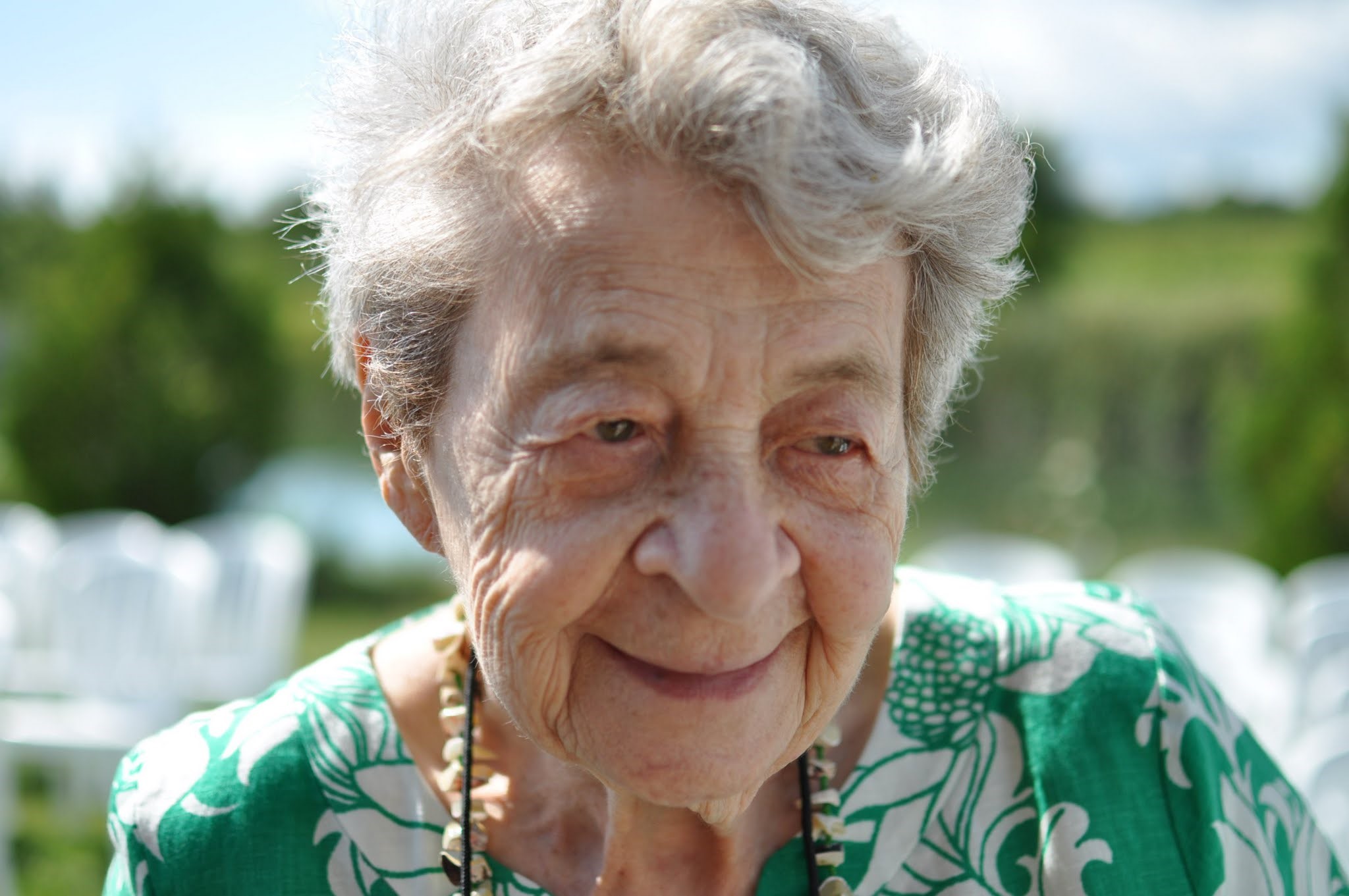
It is with deep sorrow and great gratitude that we bid farewell to Prof. Dr. Wilma Iggers, née Abeles, who passed away at the age of 104.
Wilma Iggers was a Germanist and cultural historian known far beyond the USA, the Czech Republic and Germany, who fled to Canada with her Jewish family in 1938 to escape the Nazi terror and worked throughout her life to promote understanding between people of different religions, cultures and world views. Together with her husband, the historian Georg Iggers, she was active in the black civil rights movement in the USA in the 1950s (Little Rock Nine) and later in the peace movement.
From the mid-sixties, Wilma and Georg Iggers taught in Buffalo, N.Y., but also increasingly spent time researching in Göttingen. They later maintained a permanent residence there and made friends both inside and outside the university.
Wilma Iggers was a recognized expert on Bohemian Jewry. In 2004 she was awarded the Masaryk Prize in Prague for her numerous publications. Wilma will not only be fondly remembered as a bridge-builder between East and West and between Christians and Jews, but also as a mother of three children who was always committed to helping others throughout her life.
We are very grateful to have known Wilma Iggers and will honor her memory as an honorary member of our association Brücken Bauen e. V.
The Board of Directors:
Dr. Heinrich Pingel, Dr. Hajo Billmann, Birgit Rausch and Jannis Schröder
We join Prof. Wilma Iggers as friends, colleagues and companions:
Prof. i.R. Dr. Klaus J. Bade and Dr. Susanne C. Meyer, Berlin
Prof. Dr. Katerina Capkova, Prag
Prof. Dr. Mario Keßler, Berlin
Prof. i.R. Dr. Jürgen and Dr. Urte Kocka, Berlin
Dr. Rita Kuczynski, Berlin
Prof. Dr. Monika Richarz, Berlin
Prof. Dr. Hanns and Sabine Seidler, Darmstadt
Peter Th. Walther, PhD, Berlin
Herford, Berlin, Darmstadt, Prague, March 6, 2025
Obituary for Georg Iggers
Georg G. Iggers
†
December 7th, 1926 - November 26th, 2017
We mourn the loss of Prof. Dr. George G. Iggers, recipient of the Federal Cross of Merit First Class of the Federal Republic of Germany. He passed away on the morning of November 26 in Amherst, N.Y. (USA)
The Verein Brücken Bauen e. V. - Verein zur Förderung von interkutureller Verständigung (Herford) extends its heartfelt condolences to Prof. Dr. Wilma Iggers and her family. We will honor the memory of our honorary member Georg Iggers.
This website is dedicated to the exemplary lives of Georg and Wilma Iggers, their commitment to a humane coexistence between people of different religions, skin colors, political views and cultural backgrounds.
We will not allow their commitment as scientific and human bridge builders between East and West in Europe and worldwide in the 20th and 21st centuries to be forgotten.
Board of the Brücken Bauen e. V. association
Herford, December 2017
Annual Letters
The Annual Letters of Wilma and Georg Iggers
From 1960 onwards, Georg and Wilma Iggers sent circular letters to members of their own family, friends and academic colleagues at the end of each calendar year. These were written in English. In these letters, they reviewed the previous year and reported on their family, professional activities and trips they had taken. They also comment on current developments and events at national and international level. The Annual Letters subsection documents the annual letters we have received so far.